Best Espresso Machine Under $1,000
The Gaggia Classic Evo Pro at under $500 is the best espresso machine under $1,000, because its commercial 58 mm group and rebuildable design leave under $500 of a $1,000 budget for a grinder. Under $1,000 the machine is not the real question: a $900 machine with a $60 grinder is beaten by an under-$500 machine paired with an under-$500 MiiCoffee DF64 II, a complete setup at under $1,000.
Under $1,000 the machine is not the decision. The split between machine and grinder is. The Gaggia Classic Evo Pro at under $500 wins this band not because it is the most capable machine you can buy for the money, but because it is a genuinely good one that leaves under $500 of a $1,000 budget for the component that decides how the coffee actually tastes. A commercial 58 mm portafilter, a brass group and a solenoid valve, in a machine you can service with hand tools, is a lot of machine for half a thousand dollars.
Why is the budget split the real question under $1,000?
Espresso is water forced through about 18 g of finely ground coffee at roughly 9 bar, yielding about 36 g of liquid in 25 to 30 seconds. Two components control that: the machine holds pressure and temperature, and the grinder controls resistance. Only one of those is adjustable shot to shot, and it is the grinder.
That asymmetry is why the split matters so much at this price. Above $2,000, machines differ in ways that reach the cup on their own. Between $300 and $1,000 they mostly do not. A Bambino, a Gaggia Classic Evo Pro and a Breville Barista Express all deliver about 9 bar at temperatures inside the usable 90 to 96 C window. What separates their output in a real kitchen is whether the grounds going in were milled evenly and fine enough to hold that pressure for 25 seconds.
So a reader spending $900 on a machine and $60 on a grinder has bought a temperature-stable way to make an unbalanced shot. The grinder cannot hold a setting fine enough to slow the water down, so the shot gushes in 15 seconds, tastes sour and thin, and no adjustment on the machine fixes it. The same $960 split as under $500 machine and under $500 grinder produces espresso the first reader will not match at any dose.
Extraction yield, the percentage of dry coffee dissolved into the drink, needs to land between about 18 and 22 percent. Grind is the dial that moves you inside that window. Everything else, including a second boiler and a PID, only decides how repeatably you arrive.
The three machines under $1,000 worth buying
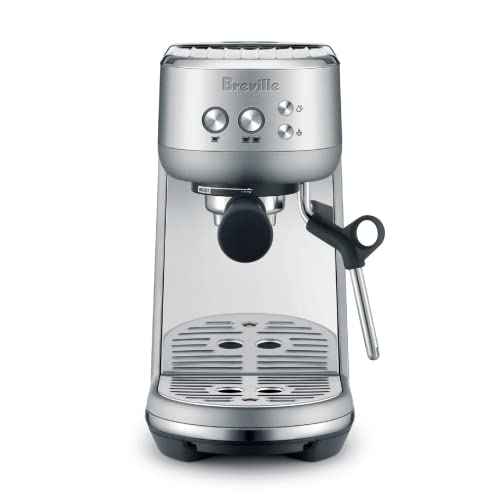
Breville BES450BSS Bambino Espresso Machine
The Bambino Plus without automatic milk texturing. Same 3 second thermojet and 9 bar extraction, and you steam by hand, which is a skill worth learning anyway.
Best for: The smallest budget that still buys genuine 9 bar espresso rather than a pressurised imitation.
Check price
Gaggia RI9380/49 Classic Evo Pro Espresso Machine
A commercial 58mm portafilter, a brass group and a solenoid valve in a machine you can rebuild with hand tools. The modification community around it is enormous.
Best for: People who want a machine they can maintain and upgrade for years rather than replace.
Check price
Breville BES876BSS Barista Express Impress
Adds assisted tamping and automatic dose correction to the Barista Express, which removes the two steps beginners get wrong most often.
Best for: A complete cafe setup in one box, with the puck prep partly automated.
Check priceBudget bands are a guide; confirm the current price on Amazon. As an Amazon Associate we earn from qualifying purchases.
What does $1,000 buy as a complete setup?
Below are six ways to spend the same total. Every row is a machine plus the grinder that goes with it, priced at the figures published on Amazon at the time of writing. The last column is what is left for a scale, a tamper and a distribution tool, which together cost under $250 and are not optional in practice.
| Split | Machine | Machine | Grinder | Grinder | Total | Left of $1,000 |
|---|---|---|---|---|---|---|
| Machine only | Barista Express Impress | under $1,000 | Built into the machine | Included | under $1,000 | under $250 |
| Machine heavy | Barista Express | under $1,000 | Built in, plus a scale | Included | under $1,000 | under $500 |
| Even split | Bambino Plus | under $500 | Baratza Encore ESP | under $250 | under $1,000 | under $500 |
| Grinder forward | Gaggia Classic Evo Pro | under $500 | MiiCoffee DF64 II | under $500 | under $1,000 | under $250 |
| Grinder forward, cheaper body | Breville Bambino | under $500 | Eureka Mignon Specialita | under $1,000 | under $1,000 | under $250 |
| Single dosing | Gaggia Classic Evo Pro | under $500 | Eureka Mignon Zero | under $500 | under $1,000 | under $250 |
Read the first two rows against the fourth. The Barista Express Impress at under $1,000 leaves under $250 and gives you a hopper-fed conical grinder designed for convenience: it grinds straight into the portafilter, tamps for you, and corrects the dose. That is a real benefit and it removes the two steps beginners get wrong most often. But grind quality is where it is compromised, because the grinder inside it costs the manufacturer a fraction of what a standalone one does.
The grinder-forward row spends under $1,000 on the Gaggia Classic Evo Pro and the MiiCoffee DF64 II , which puts 44 percent of the setup cost into grinding, against 0 percent in the machine-only row. Those two setups cost within $100 of each other and do not produce comparable espresso. The grinder versus machine budget calculator will run the same split for whatever total you actually have.
The most extreme sensible row is the fifth: the Breville Bambino at under $500 with the Eureka Mignon Specialita at under $1,000, a total of under $1,000. That is the best grind quality available at this budget, on a machine that still delivers 9 bar and heats in about 3 seconds, and it is the setup an experienced person would build if handed $1,000 and told to maximise what is in the cup. It asks you to steam milk by hand, which is a skill worth learning anyway.
Other machines in and around this budget

Breville BES500BSS Bambino Plus Espresso Machine
A 3 second heat-up thermojet, 9 bar pressure and automatic milk texturing in a machine only 7.7 inches wide. No built-in grinder, which is the point: it leaves the grinder budget free.
Best for: A first real espresso machine paired with a separate burr grinder.
Check price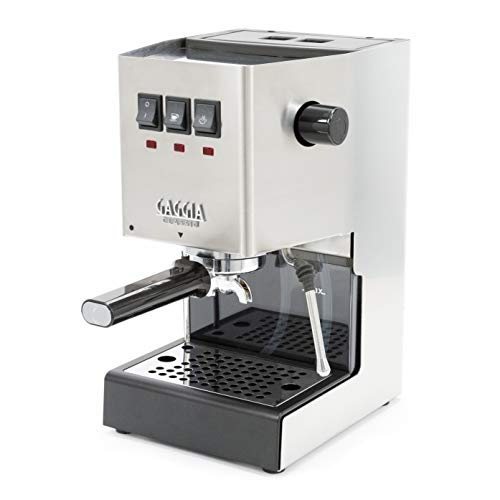
Gaggia RI9380/46 E24 Espresso Machine, Brushed Stainless Steel
A commercial 58mm portafilter and a three-way solenoid valve at the price of a plastic entry machine, which is the combination that makes a machine worth modifying later.
Check price
Breville BES870XL Barista Express Espresso Machine
The default recommendation for a decade because it is a complete setup in one box: conical burr grinder, 54mm portafilter, steam wand and a 67 oz tank.
Best for: One purchase, one footprint, no separate grinder to buy or house.
Check price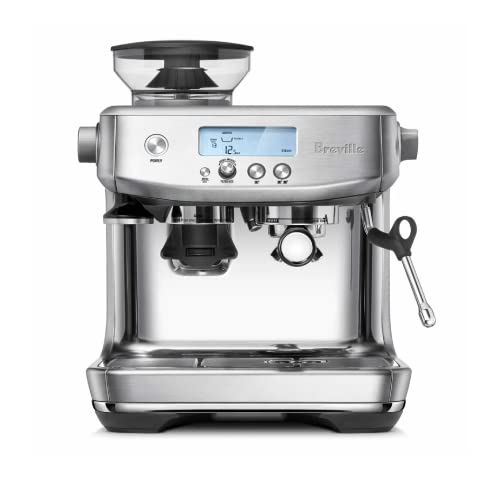
Breville BES878BSS Barista Pro Espresso Machine
The Barista Express with a thermojet heater and a digital display, so it is ready in seconds rather than minutes.
Check price
Rancilio Silvia Espresso Machine
A commercial brass group and a 12 oz brass boiler in a single boiler home body. Famously durable, famously unforgiving about temperature timing.
Check priceBudget bands are a guide; confirm the current price on Amazon. As an Amazon Associate we earn from qualifying purchases.
Which machine suits which kitchen?
Buy the Gaggia Classic Evo Pro at under $500 if you want the machine to outlive the decade. Its 58 mm commercial group means every precision basket, naked portafilter, calibrated tamper and puck screen on the market fits it, and its parts are available and replaceable. It has no PID as sold, so brew temperature drifts more than on a Breville, and a large share of owners eventually add one. That is not a defect so much as an invitation. It costs under $250 more than the Bambino and buys you the commercial standard rather than speed.
Buy the Breville Bambino at under $500 if you want the cheapest honest entry and intend to spend the difference on grinding. A 3 second ThermoJet heat-up and manual steaming, in a body narrow enough to sit beside a grinder on a normal counter. Its 54 mm portafilter locks your accessory choices to the Breville ecosystem, which is the trade.
Buy the Barista Express Impress at under $1,000 if you have one slot on the counter and no appetite for puck prep. Assisted tamping and automatic dose correction do genuinely remove failure modes, and a machine that gets used every day beats a better machine that intimidates its owner.
Consider the Gaggia RI9380/46 E24 Espresso Machine, Brushed Stainless Steel at under $500 if you want the 58 mm commercial group and the three-way solenoid at the lowest price on the market. It is the same design philosophy as the Classic Evo Pro in a plainer body. And if you are weighing the Gaggia against the classic durability argument, the Gaggia Classic Evo Pro versus Rancilio Silvia comparison is the direct answer, because those two machines are the two serious 58 mm single boilers people actually cross-shop.
Who should not buy the top of this range?
Anyone who has not yet bought a burr grinder. This is the single most common expensive mistake in home espresso, and it is worth being blunt about. If you spend under $1,000 on the Barista Express Impress you have bought a grinder, so this does not apply. But if you spend under $1,000 to under $1,000 on a machine without an integrated grinder and plan to use pre-ground coffee or a blade grinder, you have bought nothing. Pre-ground coffee is milled for drip, sits far too coarse for 9 bar, and gushes through the basket in 12 to 15 seconds no matter what the machine does. It also stales within days of grinding, so the flavour was already gone before it reached the puck.
Buy the Breville Bambino at under $500 and the Baratza Encore ESP at under $250 instead, a complete setup at under $1,000 when paired with the Bambino Plus , or under $500 with the plain Bambino. Add the better machine in two years, keep the grinder, and you will have spent the same money in a far better order.
Anyone whose priority is milk drinks in under two minutes with no technique should also stop here. Every machine on this page asks you to grind, dose, tamp, pull and texture. That is roughly four minutes for the first drink and about ninety seconds once it is habit. If that is not the deal you want, a bean to cup machine is the honest answer and the semi-automatic versus super-automatic comparison lays out exactly what you trade away.
And anyone who has not costed the accessories should pause. A scale reading to 0.1 g at under $50, a calibrated tamper and a distribution tool are what turn a machine into a repeatable process. A under $1,000 machine with no scale is an under-$1,000 guess.
What grinder should go with each of these machines?
At under $250, the Baratza Encore ESP is the floor for espresso. It has 20 micro-adjustments inside the espresso range, which is enough resolution to move a shot by two or three seconds at a time, and Baratza publishes parts diagrams and sells every wear part. The Breville BCG820BSS Smart Grinder Pro at the same price grinds straight into a 54 mm or 58 mm portafilter with the supplied cradle, which is convenient if counter depth is tight.
At under $500 to under $500, you reach stepless adjustment and low retention. The MiiCoffee DF64 II pairs 64 mm flat burrs with a single dosing workflow, so you weigh beans in and get essentially the same weight out. The Eureka Mignon Zero Single Dose Espresso Grinder at under $500 does the same job on a Eureka chassis. This tier is where most people stop upgrading, and it is the right place to spend the money freed up by an under-$500 machine.
At under $1,000, the Eureka Mignon Specialita is a set-and-forget hopper grinder with stepless 55 mm burrs and timed dosing, built to grind the same drink every morning for years. It only makes sense at this total if the machine is at the bottom of the band. The full breakdown of every option is in the espresso grinder roundup.
If you want the whole thing costed as a list rather than as a comparison, the intermediate coffee bar setup prices a complete build in this band with running subtotals, including the accessories most buying guides quietly leave out.
What does a morning on one of these machines look like?
Worth knowing before you spend $1,000, because the routine is identical across every machine on this page and it is the part buying guides skip. You weigh 18 g of beans, grind them, tip them into the basket, break up the clumps with a distribution tool, tamp level, lock the portafilter in and start the shot on a timer. You are aiming for about 36 g in the cup in 25 to 30 seconds, which is a 1:2 brew ratio: yield out divided by dose in.
If it runs fast, say 36 g in 18 seconds, the coffee under-extracted and will taste sour and thin, so you grind finer. If it crawls to 40 seconds, it over-extracted and will taste bitter, drying and ashy, so you grind coarser. Extraction yield, the percentage of the dry coffee dissolved into the drink, wants to land between about 18 and 22 percent, and that two-branch decision is essentially the whole troubleshooting tree. Change one variable at a time or you learn nothing from the result.
Brew temperature is the second lever, between 90 and 96 C. Lighter roasts want the top of that range because they are harder to extract, darker roasts the bottom because they give up solubles readily and turn ashy. On a PID machine you set it. On the Gaggia Classic Evo Pro you manage it by timing your shot against the heating cycle, which sounds worse than it is once it becomes habit.
Milk is a separate skill with a narrower target. Texture to 55 to 65 C, because above roughly 70 C the proteins denature and the milk tastes scalded, and lactose sweetness peaks near 60 C. That is why a properly steamed flat white tastes sweet with no sugar in it. On a single boiler you do the shot first, then the milk, then wait or purge before the next drink, which costs 20 to 40 seconds and is the single most noticeable difference between this band and a dual boiler.
Beans are the cheapest variable and the one people neglect longest. Espresso wants coffee roughly 7 to 21 days off roast, because carbon dioxide from roasting disrupts extraction before that and the coffee stales after it. A supermarket bag with no roast date is very likely outside that window, which means some of the inconsistency people blame on an under-$500 machine was in the bag before it reached the grinder. The full sequence is in how to dial in espresso.
What does this budget genuinely not buy?
Simultaneous brewing and steaming. Every machine here except the Barista Express family runs a single boiler, so you pull the shot, wait for the boiler to climb to steam temperature, texture the milk, then wait or purge before the next shot. That costs 20 to 40 seconds per drink and becomes genuinely irritating at four drinks in a row.
Rock-solid temperature stability. A PID keeps brew water inside a narrow band and the Gaggia Classic Evo Pro does not have one as sold. In practice you learn the machine's rhythm, or you fit a kit. Both work. Neither is as effortless as a dual boiler with PID on both circuits.
Plumbing, flow profiling or a rotary pump. Those start under $2,500 and are genuinely different machines rather than better versions of these. If the reason you are looking under $1,000 is that you are not sure you will still care in two years, that is a good reason, and the right move is an under-$500 machine with an under-$500 grinder. If you stop caring, you sell a grinder that holds its value. If you do not, you upgrade the machine and keep the half that mattered.
We also have full reviews of each: Breville Barista Express review and Breville Bambino Plus review.
Frequently asked questions
What is the best espresso machine under $1,000?
The Gaggia Classic Evo Pro at under $500. It uses a commercial 58 mm portafilter, a brass group and a three-way solenoid valve, so it takes the same precision baskets and naked portafilters as machines costing three times as much, and it can be rebuilt with hand tools. Critically, it leaves under $500 of a $1,000 budget for a grinder, which is where the remaining quality actually comes from.
Is a $900 espresso machine better than a $500 one with a good grinder?
Almost never, at the same total. Grind size is the only variable that meaningfully controls shot time, so a $900 machine paired with a $60 grinder cannot land a 25 to 30 second shot repeatably. An under-$500 Gaggia Classic Evo Pro with an under-$500 MiiCoffee DF64 II costs under $1,000 together and will out-pull the more expensive machine on any bean either can handle.
Should I buy an all-in-one machine with a built-in grinder?
If counter space is your binding constraint, yes. The Breville Barista Express Impress at under $1,000 puts grinder, assisted tamping and steam wand in one footprint and removes the two steps beginners get wrong most often. If space allows a separate grinder, a cheaper machine plus a dedicated grinder gives better grind quality and lets you upgrade either half independently later.
How much of a $1,000 budget should go to the grinder?
Roughly a third to a half. On a $1,000 budget that means $330 to $500 on the grinder, which buys a stepless single dosing grinder such as the MiiCoffee DF64 II at under $500 or the Eureka Mignon Zero at under $500. Below about $200 the adjustment steps become too coarse for espresso, and you end up choosing between an 18 second shot and a 38 second one with nothing usable between them.
Does the Gaggia Classic Evo Pro need modifications to be good?
No, but it rewards them. As sold it has no PID, so brew temperature is controlled by a thermostat and drifts more than on a Breville. Owners commonly add a PID kit, an over-pressure valve set to 9 bar and a precision basket. None of that is required for good espresso, and the machine is worth buying purely because those options exist for years to come.
What else do I need besides the machine and grinder?
A scale reading to 0.1 g with a timer, a tamper sized to your portafilter, and a distribution tool. Budget under $250 for the three. Without a scale you cannot know your dose, and without a known dose the brew ratio that defines the drink is guesswork. A knock box and a tamping mat are comfort items you will buy within a month anyway.
How we choose: we compare published manufacturer specifications, verified owner reviews and published barista guidance. We do not test gear in person. Espresso machines run mains electricity, pressurised water and steam above boiling point, so follow your manufacturer's manual and leave electrical or boiler work to a qualified technician. Everything here is researched guidance, not professional advice.