The One Big Coffee Gift (2026): Which Espresso Machine, Matched to Their Drink and Skill
For most recipients the one big coffee gift is the Breville Barista Express Impress: grinder built in, assisted tamping, a real 54 mm portafilter and a drinkable shot on day one. Give the Barista Touch Impress to a latte drinker who will not learn to steam, the Gaggia Classic Evo Pro plus a grinder to a tinkerer, the Dual Boiler to an experienced hobbyist and a super-automatic to a household that wants a button. Budget under $100 on top for a scale, a WDT tool and beans.
An espresso machine is the one big gift in this hobby: the purchase that turns "we should get better coffee" into a morning routine. It is also the gift most often bought wrong, because the catalogue is sorted by brand and price and the decision is actually about what they drink, how much they want to learn, and what fits the counter. This finder works through those three questions in order, then matches each answer to one of nine machines, every one of which has its own specification page in the machine index. Prices sit in the cards only, because they move through the holiday quarter.
Affiliate disclosure: product links go to Amazon and we earn a commission on qualifying purchases at no extra cost to you. Nothing here is sponsored and we do not test gear in person; picks are based on published specifications and owner-review consensus. Full affiliate disclosure.
Quick picks by recipient
One pick per kind of recipient, with the reasoning further down.
| For | Pick |
|---|---|
| Most recipients | Breville BES876BSS Barista Express Impress |
| The latte or flat white drinker who wants cafe results with no technique | Breville BES881BSS Barista Touch Impress Espresso Machine |
| The busy person with good taste | Breville BES985BSS Oracle Jet Espresso Machine |
| The hobbyist who already weighs and times every shot | Breville BES920XL Dual Boiler Espresso Machine |
| The tinkerer who watches espresso videos for fun | Gaggia RI9380/49 Classic Evo Pro Espresso Machine |
| The person for whom the machine is also an object | Ascaso Dream PID Programmable Espresso Machine with Volumetric Controls |
| The family or office that wants the button to be very good | Jura E8 Automatic Coffee Machine |
| The pod-machine household that wants better coffee, not a hobby | Philips 3200 Series Fully Automatic Espresso Machine with LatteGo |
| The small-counter beginner who is willing to buy or receive a grinder too | Breville BES450BSS Bambino Espresso Machine |
Shipping note: Order early for the holidays; popular items sell out around Black Friday. Espresso machines and grinders ship in large boxes and can take longer to arrive, so leave extra time for those.
Who are you buying for?
Three levels, and each points at a different machine. The curious cook has a pod machine or a drip machine, has said the coffee could be better, and might not want a hobby. Buy them the machine that makes a good cup with the least to learn. The committed beginner has asked for a machine by name, or has started buying whole beans and grinding them badly; buy them the machine they will keep, and make sure the grinder is covered. The experienced owner already has a machine and has run into its limits, which are always the same two: the steam wand cannot keep up with the shots, and the temperature wanders. The espresso machine buying guide walks through those decisions in the order they actually get made.
| They are | They drink | Give | Grinder |
|---|---|---|---|
| Curious, pod machine today | Anything, quickly | Philips 3200 LatteGo | Built in |
| Curious, wants real espresso | Espresso, americano | Barista Express Impress | Built in |
| Curious, small counter | Espresso, occasional latte | Bambino | Add Encore ESP |
| Milk drinker, no interest in steaming | Latte, flat white | Barista Touch Impress | Built in |
| Committed, likes to tinker | Espresso, cortado | Gaggia Classic Evo Pro | Add DF64 II |
| Busy, good taste | Anything, well made | Oracle Jet | Built in |
| Experienced, makes lattes for two or more | Milk drinks back to back | Dual Boiler | Add DF64 II |
| Experienced, wants an object | Espresso | Ascaso Dream PID | Add DF64 II |
| A household or office | A lot, all day | Jura E8 | Built in |
Question one: do they want a hobby or a button?
This is the fork that eliminates half the market, and it has nothing to do with budget. A semi-automatic machine asks the person to grind, dose, tamp and time every shot. That is a minute of attention per drink, and for the right person it is the best minute of the day. For the wrong person it is the reason the machine ends up in a cupboard by spring. A super-automatic does all of it at one press, produces a slightly less interesting cup, and produces it every single time. The semi-automatic versus super-automatic comparison goes deep on the trade-off; the short version is that if the recipient has ever asked about beans, grind size or ratios, they want the hobby, and if their current machine takes pods and they have never complained about it, they want the button.
The two buttons here are the Philips 3200 LatteGo , which is the best value super-automatic sold and makes a far better cup than any pod, and the Jura E8 , which costs several times as much and earns it in consistency, milk quality and the fact that it cleans itself. The super-automatic roundup compares them with the De’Longhi in between. There is also a third path: the Oracle Jet grinds, doses and tamps automatically but makes espresso through a real portafilter, which is the machine for someone who wants the cup an enthusiast gets and none of the ritual.
Question two: what do they drink?
The drink decides the steam wand, and the steam wand is where cheap machines fall down. A person who drinks straight espresso or americanos can be happy on almost anything here, and the Bambino or the Gaggia Classic Evo Pro gives them the best shot per dollar. A person who drinks one latte a day needs a wand that can texture milk properly, which the Bambino, the Impress and the Gaggia all manage with practice. A person who makes lattes for two or more, back to back runs into the wall that every single-boiler machine hits: the boiler has to switch between brew and steam temperature, and the second and third drinks wait. That is what the Dual Boiler exists to fix, and the single versus dual boiler comparison explains why it costs what it does.
A person who drinks milk drinks and has no interest in learning to steam is the easiest to buy for: the Barista Touch Impress textures the milk automatically to a chosen temperature and foam level, and still makes real espresso underneath. The milk steaming guide is for the person who does want to learn, and it is the reason a manual wand is the better gift for them.
Question three: does the machine need a grinder?
Half the machines here include one and half do not, and giving a machine without a grinder to someone who does not own one is giving them a machine that makes nothing. The Impress , the Touch Impress , the Oracle Jet and both super-automatics grind for themselves. The Bambino , the Gaggia , the Dual Boiler and the Ascaso do not, and they need a grinder that can actually reach espresso fineness, which rules out anything under about $150. The Baratza Encore ESP is the entry answer and the DF64 II is the one that owners rarely outgrow. The grinder guide covers the middle ground.
If you have a fixed total and are buying both, do not split it evenly. The grinder versus machine budget calculator weights the grinder because a $400 grinder on a $300 machine makes better espresso than a $300 grinder on a $1,600 machine, and the Gaggia versus Bambino comparison shows what each entry machine does with a good grinder behind it.
| Budget band | Machine | Grinder | Why this split |
|---|---|---|---|
| Under $500 | Bambino | Encore ESP | Cheapest pairing that makes real espresso |
| Under $750 | Bambino | DF64 II | The grinder most owners never replace |
| Under $1,000 | Barista Express Impress | Built in | Simplest first setup, one box |
| Under $1,000 | Gaggia Classic Evo Pro | DF64 II | The enthusiast’s starting point |
| Splurge | Dual Boiler | DF64 II | Back-to-back lattes, stable temperature |
Which machine fits which recipient?
Nine machines, each matched to a level and a drink. The badge on each card says who it is for; the machine index page linked from each name has the boiler type, portafilter size and dimensions if you want to check a detail. The best espresso machine roundup ranks the same machines in three tiers with the trade-offs named, and the under $1,000 roundup covers the middle of the range in more depth.
The nine machines
Most expensive first. Every one includes or needs a grinder as noted, and every one has a specification page in the machine index.

Breville BES876BSS Barista Express Impress
Grinder built in, an assisted tamping lever, a dose-correction readout and a 54 mm portafilter that makes real espresso. One box, one footprint, a drinkable shot on the first morning. Level: never made espresso, wants to.
Check price on Amazon
Breville BES881BSS Barista Touch Impress Espresso Machine
The Impress grind-and-tamp system with automatic milk texturing on a touchscreen. Real espresso underneath, no steaming to learn on top.
Give it to: The latte or flat white drinker who wants cafe results with no technique. Level: any.
Check price on Amazon
Breville BES985BSS Oracle Jet Espresso Machine
Automatic grinding, dosing and tamping with a 3 second heat-up, but a real portafilter and a real puck. The machine for someone who wants espresso an enthusiast would drink and no ritual to get it.
Give it to: The busy person with good taste. Level: any.
Check price on Amazon
Breville BES920XL Dual Boiler Espresso Machine
Two boilers, PID control and pre-infusion, so shot and milk happen together and the temperature is what the display says. The upgrade people make after two years on an all-in-one and then keep for a decade.
Give it to: The hobbyist who already weighs and times every shot. Level: experienced.
Check price on Amazon
Gaggia RI9380/49 Classic Evo Pro Espresso Machine
A commercial 58 mm group, a stainless boiler and decades of production behind it. Demands a grinder and some learning; rewards both with shots that shame machines at twice the price.
Give it to: The tinkerer who watches espresso videos for fun. Level: enthusiast, or about to be.
Check price on Amazon
Ascaso Dream PID Programmable Espresso Machine with Volumetric Controls
A hand-built Spanish thermoblock machine with PID temperature control, volumetric dosing and a steel body that looks like nothing else on a counter. The heirloom option.
Give it to: The person for whom the machine is also an object. Level: experienced, or someone buying the last machine they intend to own.
Check price on Amazon
Jura E8 Automatic Coffee Machine
The super-automatic for a household that drinks a lot of coffee: a built-in grinder, automatic milk, a self-cleaning cycle and consistency that a semi-automatic cannot match at one press.
Give it to: The family or office that wants the button to be very good. Level: none.
Check price on Amazon
Philips 3200 Series Fully Automatic Espresso Machine with LatteGo
Bean to cup at one press, with a milk system that rinses itself. Less interesting coffee than a semi-automatic, and far more of it, because nothing stands between the person and the button.
Give it to: The pod-machine household that wants better coffee, not a hobby. Level: none.
Check price on Amazon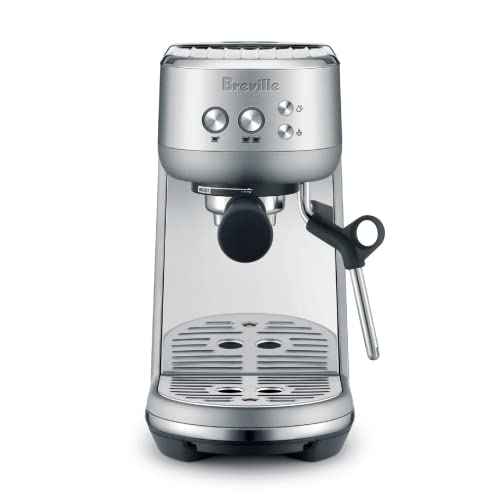
Breville BES450BSS Bambino Espresso Machine
A 3 second heat-up, a proper steam wand and a footprint the width of a toaster. Needs a separate grinder, which is the point: the Bambino plus a real grinder outperforms any all-in-one at the same total.
Give it to: The small-counter beginner who is willing to buy or receive a grinder too. Level: curious, committed.
Check price on AmazonBudget bands are a guide; confirm the current price on Amazon. As an Amazon Associate we earn from qualifying purchases.
What do they need alongside the machine?
Three things that no machine ships with, and together they cost less than $100: a 0.1 g scale , a WDT distribution tool and a bag of fresh whole beans. A machine gifted without a scale gets its first week of shots pulled by eye, and a disappointing first week is how machines end up in cupboards. In a hard-water area, add a water treatment product from the first fill; the water hardness calculator shows how fast a machine scales on tap water, and the water guide says what to use instead. Everything else on the under $50 gift page can wait until they know what they are missing.
Will it fit on their counter?
Measure the spot without explaining why. The Bambino needs about 8 inches of width; an all-in-one Breville needs 13 to 16 inches plus clearance above for the bean hopper; the Dual Boiler is 16 inches wide and refills from the top; a Jura needs about 14 inches and room to open the bean lid. Add the grinder beside it if the machine needs one. The counter space planner takes a machine and a grinder and returns the footprint, and the layout and power guide covers the outlet, because a Dual Boiler and a grinder on the same 15 amp circuit as a kettle will trip it. The complete builds show the three setups laid out with every item priced, which is useful if the gift is going to grow into a coffee bar.
What should you check before ordering?
Plug and voltage. Buy from a listing that states a US plug; machines sold for other markets arrive with the wrong one and a voltage that does not match. Return window. Machines are heavy to ship back, so confirm the window covers the holiday period. The grinder question, settled above; if the machine needs one, either buy it or make sure someone else is. Water. Ask, or check, how hard the water is where the machine is going. Availability. The Bambino Plus and the Barista Express, two of the most popular machines in this category, were on back-order when this guide was written and were left out for that reason; the Bambino and the Barista Express Impress are the same machines with a newer or simpler feature set, and both were in stock.
Last thing: the machine is the start, not the finish. If the person you are buying for ends up with sour or bitter shots in the first week, the dial-in guide and the dose and yield calculator fix that for free. Send them the link with the gift.
Frequently asked questions
What is the best espresso machine to give as a gift?
For someone who does not own one, the Breville Barista Express Impress. It includes the grinder, guides the dose and the tamp with a lever and a readout, and makes a drinkable shot on the first morning, which is the thing that decides whether a machine gets used or gets boxed. It fits the most recipients, which is what matters when you are choosing for someone else. If the budget is smaller, a Breville Bambino plus a Baratza Encore ESP makes better espresso for slightly less money, with more to learn.
Should I give a semi-automatic or a super-automatic?
Ask whether they want a hobby. A semi-automatic such as the Bambino, the Impress or the Gaggia Classic Evo Pro asks for a minute of attention per drink and gets better as the person does. A super-automatic such as the Philips 3200 or the Jura E8 asks for nothing and delivers the same cup every time at one press. Give the super-automatic to a busy household or an office; give the semi-automatic to anyone who has ever used the phrase "dial in" or asked about beans.
Do I need to buy a grinder with the machine?
If the machine has no built-in grinder, yes, or the gift makes nothing. The Bambino, the Gaggia Classic Evo Pro, the Dual Boiler and the Ascaso Dream PID all need one. Add the Baratza Encore ESP for a first setup or the DF64 II for the long term, and use the grinder versus machine budget calculator to split a fixed total; it weights the grinder heavily because a good grinder on a cheap machine beats the reverse. The Impress, the Touch Impress, the Oracle Jet and every super-automatic include their grinder.
What else do they need on day one?
Beans, a scale and a distribution tool, and those three cost under $80 together. Every machine ships with a tamper and baskets, none ships with a scale, and a shot pulled by eye on a new machine is the most common reason for a disappointing first week. Add a WDT tool for a 54 mm Breville, because the narrow basket channels easily. In a hard-water area add a water treatment product from the first fill, or the machine scales inside six months.
Will it fit on their counter?
Measure the spot without explaining why. A Bambino needs about 8 inches of width and 12 of depth. An all-in-one Breville needs 13 to 16 inches wide and clearance above for the hopper. A Dual Boiler is 16 inches wide and needs a water tank refilled from the top, and a Jura needs about 14 inches and hopper clearance. The counter space planner on this site takes the machine and the grinder and tells you the footprint. Under a standard 18 inch upper cabinet, most hopper machines fit; the Oracle Jet is tight.
How do I keep the surprise but still get the right machine?
Three things tell you almost everything: what they drink, how they make coffee now, and whether they have ever mentioned the grinder. A milk-drink person gets a machine with good or automatic steam. A pod-machine person who wants "better coffee" gets a super-automatic or an all-in-one. Anyone who has mentioned grind size, ratios or dialling in gets a semi-automatic and a separate grinder. Check the counter, check the return window, and buy from a listing that ships with a US plug.
How we choose: we compare published manufacturer specifications, verified owner reviews and published barista guidance. We do not test gear in person. Espresso machines run mains electricity, pressurised water and steam above boiling point, so follow your manufacturer's manual and leave electrical or boiler work to a qualified technician. Everything here is researched guidance, not professional advice.