Best Espresso Machine With Built-In Grinder (2026)
The Breville Barista Express at under $1,000 is the espresso machine with a built-in grinder that most people should buy: a 30 setting conical burr grinder, a 54 mm portafilter and a steam wand in one footprint. The honest caveat is that under $1,000 split into an under-$500 Breville Bambino and an under-$500 MiiCoffee DF64 II buys 64 mm flat burrs with stepless adjustment and grinds better for less at 2026 prices. Choose combined for counter space and one purchase decision, split for grind quality and upgradeability.
The Breville Barista Express at under $1,000 is the best espresso machine with a built-in grinder for most people. One box holds a 30 setting conical burr grinder, a 54 mm portafilter, a steam wand and a 67 oz tank, and it has been the default answer for a decade because nothing at the price replaces it cleanly. The caveat belongs in the same breath: the same money split into two appliances buys a better grinder, and grind quality is the variable that sets the ceiling on your espresso.
What does a combined espresso machine and grinder actually give you?
An all-in-one espresso machine is a pump machine with a burr grinder built into the same chassis: you fill a hopper with whole beans, grind directly into the portafilter, tamp, lock in and pull a shot without a second appliance on the counter. Everything happens in one footprint, from one power outlet, under one warranty.
That buys four specific things. The first is space. A separate grinder wants roughly 6 to 8 inches of width and 14 inches of height for the hopper, plus clearance to lift the lid. In a galley kitchen that is not a small ask, and it is often the constraint that decides the whole purchase.
The second is one decision. Buying a machine and a grinder separately means two research problems, two compatibility questions and two chances to get it wrong. An all-in-one is a single purchase that is guaranteed to work with itself, and there is genuine value in that for someone who wants coffee rather than a hobby.
The third is workflow. Grinding straight into the portafilter with the machine holding it in a cradle removes transfers, spills and static mess. The fourth is resale. A complete working setup sells as one item to one buyer, which is easier than selling two components that most people want to buy as a pair anyway.
The all-in-one machines worth shortlisting

Breville BES870XL Barista Express Espresso Machine
The default recommendation for a decade because it is a complete setup in one box: conical burr grinder, 54mm portafilter, steam wand and a 67 oz tank.
Best for: One purchase, one footprint, no separate grinder to buy or house.
Check price
Breville BES876BSS Barista Express Impress
Adds assisted tamping and automatic dose correction to the Barista Express, which removes the two steps beginners get wrong most often.
Best for: A complete cafe setup in one box, with the puck prep partly automated.
Check price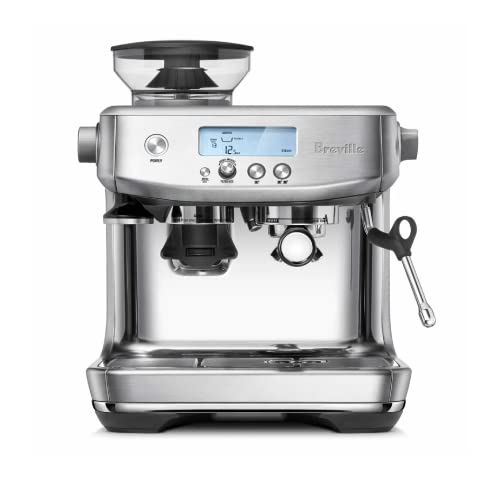
Breville BES878BSS Barista Pro Espresso Machine
The Barista Express with a thermojet heater and a digital display, so it is ready in seconds rather than minutes.
Check price
Breville BES985BSS Oracle Jet Espresso Machine
Automates grinding, dosing, tamping and milk texturing while still letting you set the shot parameters yourself.
Check priceBudget bands are a guide; confirm the current price on Amazon. As an Amazon Associate we earn from qualifying purchases.
Want the grinder built in and the tamping done for you too? That is a fully automatic machine; see the best super-automatic espresso machines.
Does the same money buy more split into two appliances?
Nearly always, and the arithmetic is close enough to be uncomfortable. This is the section the category does not like, so it deserves real numbers rather than a hedge.
A Breville Bambino at under $500 plus a MiiCoffee DF64 II at under $500 totals under $1,000. That is under $25 less than the Barista Express, and for about the same money you move from an integrated stepped grinder to 64 mm flat burrs with stepless adjustment and near-zero retention. There is no version of the comparison where the built-in unit grinds better. Flat burrs at that size produce a narrower particle distribution, and stepless adjustment lets you land between two positions instead of jumping past the setting you wanted.
| Option | Machine | Grinder | Total | What you get |
|---|---|---|---|---|
| Combined: Breville Barista Express | Under $1,000 | Built in | Under $1,000 | 30 settings, one footprint |
| Split: Breville Bambino plus MiiCoffee DF64 II | Under $500 | Under $500 | Under $1,000 | 64 mm flat burrs, stepless |
| Split: Bambino Plus plus Baratza Encore ESP | Under $500 | Under $250 | Under $1,000 | Automatic milk, repairable grinder |
| Split: Bambino Plus plus MiiCoffee DF64 II | Under $500 | Under $500 | Under $1,000 | The upgrade path the combined machine cannot take |
Sources: specifications from the manufacturers' published product pages and manuals (Breville, De'Longhi, Philips, Jura, Gaggia, Flair, WACACO); brew temperature and pressure targets follow published barista guidance such as the Specialty Coffee Association's. Prices are Amazon list prices checked in 2026. Researched, not tested in person.
The third row is the one most people should read twice. A Breville Bambino Plus at under $500 plus a Baratza Encore ESP at under $250 comes to under $1,000, which is no saving over the Barista Express alone, and it gives you automatic milk texturing, a 3 second heat-up and a grinder with 20 micro-adjustments inside the espresso range and published parts diagrams. The grinder versus machine budget calculator will split any total you give it along the same lines, and the espresso grinder roundup covers the grinder half properly. Whether that premium is worth paying at current prices is worked through in Bambino Plus versus Barista Express.
There is one more row worth noticing, the fourth. At under $1,000 the split setup has moved well past anything the combined machine can become, and that is the real structural point: the split path keeps going. The combined path stops at whatever grinder is bolted inside the case.
When does a combined machine still win?
Four situations, and all four are legitimate. It is worth naming them because the grind-quality argument is loud enough to drown out cases where the all-in-one is genuinely the right buy.
Counter space is the binding constraint. If the only free run of worktop is 14 inches wide, the split option is not a worse choice, it is not a choice at all. An all-in-one puts both functions into that space and leaves room for a cup. The counter space planner is worth five minutes before you order anything, because machines are deeper than photographs suggest and the water tank usually needs rear or top clearance.
You want to make one purchase decision. Some people want espresso, not a project. An all-in-one is complete on arrival, and the alternative involves reading about burr geometry before the first coffee. That is a real cost even if it does not show up in dollars.
Only one person in the household cares. Split setups reward attention: single dosing, adjusting for a new bag, weighing every dose. If the machine has to work for someone who just wants a flat white before work, an integrated grinder with a remembered setting and a one-touch dose is the more considerate design.
Resale matters to you. A working Barista Express is a well known, liquid item. Two separate components at the same total value take longer to sell and usually go to two different buyers.
How do the all-in-one machines compare on paper?
These four machines are closer to each other than their prices suggest, and the specification that separates them is dose control rather than brewing. All of them extract at roughly 9 bar through a PID controlled brew temperature. Where a figure is not published or varies by revision the table says so rather than repeating a number found on a forum.
| Machine | Burr type | Grind settings | Dose control | Portafilter | Price |
|---|---|---|---|---|---|
| Breville Barista Express | Conical steel, integrated | 30 | Manual dosing, manual tamp | 54 mm | Under $1,000 |
| Breville Barista Express Impress | Conical steel, integrated | 25 | Assisted tamping, automatic dose correction | 54 mm | Under $1,000 |
| Breville Barista Pro | Conical steel, integrated | 30 | Manual dosing, manual tamp | 54 mm | Under $1,000 |
| Breville Oracle Jet | Conical steel, integrated | Not published | Automatic dosing and automatic tamping | 58 mm | Under $2,500 |
The Breville Barista Express Impress costs under $250 more than the Barista Express and spends all of it on puck prep: assisted tamping through a lever, and automatic dose correction that tops up or trims the dose after the first tamp. Those are the two steps beginners get wrong most often, so the money is honestly targeted. The Breville Barista Pro costs under $250 more and spends it on heating instead: a thermojet heater that is ready in seconds rather than minutes, plus a digital display. Barista Express versus Barista Pro works that difference through in detail, and Bambino Plus versus Barista Express is the comparison that actually decides combined against split.
Does a built-in grinder hold a repeatable setting?
Reasonably well, and less precisely than a dedicated grinder, for two reasons that are worth understanding before you blame the machine for an inconsistent shot.
The first is the hopper. An all-in-one grinds from a hopper full of beans, and the weight of those beans presses down on the burrs. A full hopper and a nearly empty one feed the burrs at slightly different rates, which changes the dose and the particle distribution a little. It is a small effect and it is real, and it is why people who chase consistency eventually move to single dosing, where exactly 18 g goes in and the weight of the hopper never enters the equation.
The second is the chute. Coffee left in the grind path after a dose comes out mixed into the next one. On a built-in grinder that path is longer than on a single dose grinder because it has to travel from the burrs to a cradled portafilter, and grounds cling to it through static. A few grams of yesterday's coffee inside today's 18 g dose is not a disaster, but it does mean the first shot after changing beans is a blend of two coffees you did not choose to blend. Purge a few grams after any adjustment and the problem largely goes away.
Neither issue stops an all-in-one making very good espresso. What they do is set a slightly higher floor on variation, so the same recipe lands within a couple of seconds rather than within one. If you weigh the dose into the basket rather than trusting the grinder timer, most of the gap closes, and a $32 scale is a much cheaper fix than a different machine.
Does the 54 mm portafilter limit you later?
Yes, and it is the quiet consequence of choosing three of these four machines. Portafilter diameter is a compatibility standard, not a taste specification, and it is not interchangeable.
58 mm is the commercial size. Precision baskets, naked portafilters, distribution tools, puck screens, dosing funnels and calibrated tampers are made in 58 mm first, by many manufacturers, at competitive prices. Of the machines here only the Breville Oracle Jet takes it, which is one of the better arguments in its favour.
54 mm is the Breville size on the Barista Express, the Impress and the Barista Pro. Accessories exist and they are perfectly good, but the selection is narrower and prices are higher because fewer companies make them. If you later move to a 58 mm machine, none of your puck prep hardware moves with you. The portafilter basket size chart lists which machine takes which size, and the single cheapest improvement to any 54 mm Breville is replacing the stamped basket in the box with a precision one.
None of this is a reason to avoid Breville. It is a reason to make the choice knowingly rather than discover it after spending $150 on tools that fit the wrong machine.
Who should not buy the Breville Oracle Jet?
Anyone who would rather own the grinder separately. The Breville Oracle Jet at under $2,500 costs under $2,500 more than the Barista Express, which is 63 percent of its price, and what that premium buys is automation: automatic grinding, automatic dosing, automatic tamping and an automated steam wand, ending in a 58 mm portafilter.
The structural objection is not the price, it is the architecture. A built-in grinder cannot be upgraded without replacing the machine. If flat burrs are what you want in two years, there is no path to them from inside this chassis. And a fault in either half takes the whole appliance out of service: a grinder problem on an under-$2,500 machine means no espresso at all until it is fixed, whereas a separate grinder failing means a week of pre-ground while the machine keeps working.
Buy a Breville Bambino Plus at under $500 plus a Eureka Mignon Specialita at under $1,000 instead, which totals under $2,500 and leaves under $1,000 over. That leftover buys a scale, a precision basket, a distribution tool, a naked portafilter and a year of good beans, and each of those changes the cup more than automated tamping does. The Oracle Jet machine page has the full specification if you want it anyway, and there is a real case for it: if you want the automation and the 58 mm ecosystem in one appliance, nothing else on this page offers both.
Anyone chasing shot quality per dollar should also skip it. A machine that tamps for you removes a step, it does not raise a ceiling. Water at 9 bar still finds the fastest channel through the puck, and the tools that fix channelling are a distribution tool, a precision basket and a better grind, all of which are cheap relative to under $2,500.
What do you still have to buy after an all-in-one arrives?
Less than with a split setup, but not nothing, and the missing items are the ones people discover in week two. A scale reading to 0.1 g is first, because the ratio that defines the drink is dose in against yield out, and without weighing both you are guessing at the recipe. A conventional double is 18 g in, 36 g out, in 25 to 30 seconds. The brew ratio calculator turns any dose into a target yield.
A distribution tool is second. Every grinder throws clumps into the basket, and clumps are where channels start, so breaking them up before tamping is the cheapest measurable improvement available to any machine on this page. A precision basket in the right diameter is third. After that it is maintenance: backflush tablets for machines with a three-way valve, a group brush, and descaling on a schedule set by your water hardness rather than by the calendar.
Water is the line that quietly decides how long the machine lasts. The commonly cited target is roughly 50 to 100 ppm total hardness as calcium carbonate with alkalinity near 40 ppm. Above about 120 ppm, filtration or blended distilled water is the answer rather than descaling more often, because more frequent descaling treats the symptom instead of the input. The Barista Express machine page lists the tank and filter details, and the maintenance guide sets out the daily, weekly and monthly jobs in order.
One last note on grind. Whichever machine you choose, the same troubleshooting tree applies. Sour and thin means under-extracted, so grind finer or raise the temperature. Bitter, drying and ashy means over-extracted, so grind coarser or lower the temperature. Change one variable at a time and give the grinder a few seconds of purge after each adjustment, because the old setting is still sitting in the chute.
We also have a full Breville Barista Express review.
Frequently asked questions
Which Breville espresso machine has the best built-in grinder?
Among Breville's combined machines, the Oracle Jet has the most automated grinder, dosing and tamping for you into a 58 mm portafilter, and the Barista Pro has a faster, 30 setting grinder with a quicker heat-up than the Express. For grind quality per dollar, though, none of them matches a Bambino with a separate MiiCoffee DF64 II, which costs about the same as the Barista Express.
What is the best espresso machine with a built-in grinder?
The Breville Barista Express at under $1,000. It puts a 30 setting conical burr grinder, a 54 mm portafilter, a steam wand and a 67 oz tank into one footprint, and it has been the default recommendation for a decade because nothing at the price replaces it cleanly. Pay under $1,000 for the Impress version only if assisted tamping and automatic dose correction are worth removing two steps you would otherwise learn.
Is a combined machine worse than buying a machine and grinder separately?
On grind quality, almost always yes. An under-$500 Breville Bambino paired with an under-$500 MiiCoffee DF64 II costs under $1,000 in total, close to the under-$1,000 Barista Express, and it gives you 64 mm flat burrs with stepless adjustment instead of a stepped built-in unit. The combined machine wins on counter space, on making one decision instead of two, and on resale.
Can you upgrade the grinder in a Barista Express later?
Not the built-in one. You can stop using it and grind with a separate grinder into the same portafilter, which many owners do, but then you have paid for a grinder you are not using and it still occupies the same counter space. That is the structural limit of every all-in-one: the two halves are bought, housed, warrantied and replaced together whether you want that or not.
How many grind settings do you actually need for espresso?
Enough to move a 25 to 30 second shot by a couple of seconds per click. The Barista Express offers 30 settings across its whole range, of which only a portion falls inside espresso, so each click is a meaningful jump. A stepless grinder has no clicks at all and lets you land anywhere between two positions, which is why stepless is the specification that separates espresso grinders from general ones.
Is the Barista Express Impress worth more than the Barista Express?
It is if you would rather not learn puck prep. The Impress adds assisted tamping and automatic dose correction, which removes the two steps beginners get wrong most often: an uneven tamp and an inconsistent dose. If you intend to buy a distribution tool and weigh every dose anyway, you will be doing those jobs better by hand and the extra money is better spent on the grinder.
What happens if one half of an all-in-one breaks?
The whole appliance goes out of service. A grinder fault on a Barista Express means the machine ships back or waits for a technician, and you have no espresso in the meantime. With separate units, a grinder failure means you buy pre-ground for a week while it is repaired, and the machine keeps working. That is a real ownership difference that never appears on a spec sheet.
How we choose: we compare published manufacturer specifications, verified owner reviews and published barista guidance. We do not test gear in person. Espresso machines run mains electricity, pressurised water and steam above boiling point, so follow your manufacturer's manual and leave electrical or boiler work to a qualified technician. Everything here is researched guidance, not professional advice.